My mother was one of the kindest, gentlest souls you could ever meet. She wouldn’t hurt a fly, unless, of course, it landed in her space. Then all bets were off. “Boundaries!” she’d declare with righteous fury. “That fly invaded my boundaries!” And with that, she’d launch into a full-on swatting frenzy until the poor bug got the message: You don’t belong here.
These days, we refer to it as “staying in your lane.” But whether you’re talking about bugs or people, the principle is the same: We all need healthy boundaries.
I’ve never been a fan of confrontation. In fact, I avoid it like the plague. But I do appreciate it when people respect both my emotional and physical space.
To be clear, I’m not talking about pushing people away during times of grief or support. When my mom passed, I welcomed every hug and tearful word from friends and family. That kind of closeness is beautiful and healing.
What I’m talking about now are the uninvited intrusions, the ones where people overstep, press too hard, or get too close without invitation. You know the type. They mean well (sometimes), but they show up emotionally or physically where they don’t belong.
So, how do we let people know they’ve crossed a line without sounding rude, standoffish, or confrontational?
Here are three gracious but firm ways to say “Get out of my space” without flipping the table or pulling out the flyswatter.
1. “I appreciate your input, but I need a little space to think through this on my own.”
This phrase works like a charm when someone is crowding you with opinions or “help” you didn’t ask for. It sets a respectful boundary while acknowledging their (often unsolicited) good intentions.
Translation: Please step back and let me breathe.
2. “I’m taking some time for myself right now; can we connect a bit later?”
Perfect for when someone keeps texting, calling, or showing up unannounced. It lets them know you’re not available without shutting the door completely.
Translation: This is me time. Kindly wait your turn.
3. “I’m not comfortable with that.”
Short, sweet, and powerful. You don’t need to explain. You don’t need to justify. Just stand in your truth and let it be known that something has crossed a line.
Translation: That’s a boundary, friend. Step back.
Mom Would Be Proud
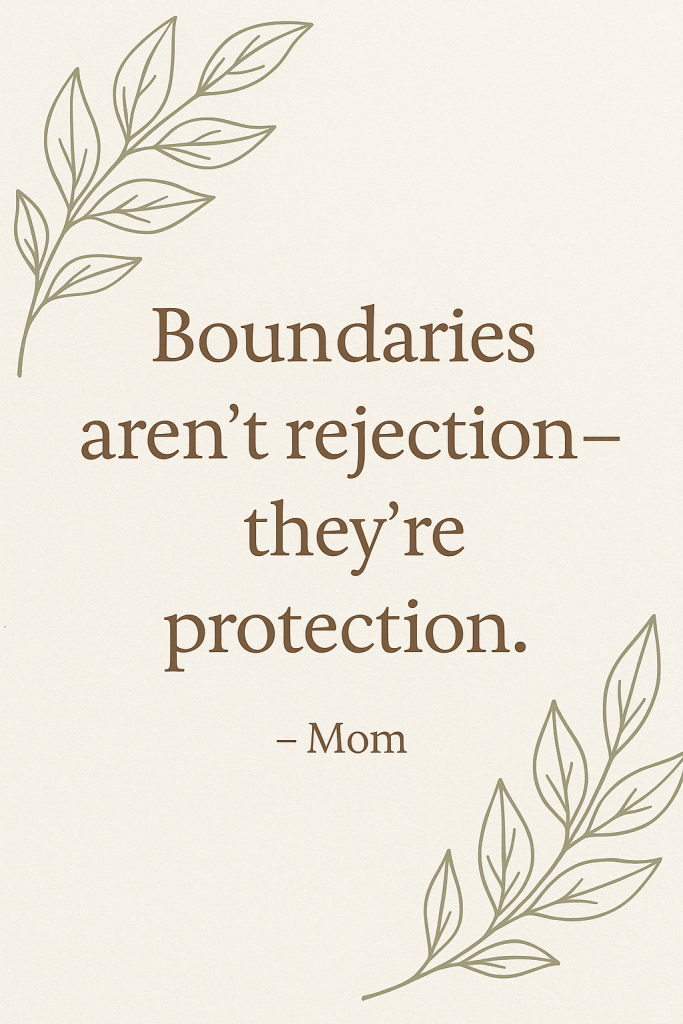
My mom taught me that boundaries are not about rejection; they’re about protection. Just like she didn’t hate that fly (well, not personally), she didn’t want it buzzing in her ear or walking across her sandwich.
The same goes for people. We can love them, care about them, and still need space from them sometimes.
What Do You Say?
Do you have a gentle but firm way to tell people to scoot? Have you ever struggled with setting personal boundaries? I’d love to hear your tips, stories, or wisdom that have been passed down from your own family.
There are some people who leave a mark on your heart that time cannot erase. For me, that person was my mother.
While she’s no longer with us, the wisdom she passed on continues to guide me, and it has the power to guide others as well. Her lessons weren’t grand lectures or complicated philosophies. They were simple, deeply rooted truths that touched every part of life.
Here are the three life lessons my mom taught me, lessons built on love, forgiveness, and grace.
Lesson 1: Love Without Limits
My mother was the very definition of love in motion.
When you looked at her, you saw love. When you talked with her, you heard love. And when she said, “I love you,” it wasn’t just words; it was a feeling that wrapped around you like music for the soul.
She believed that love should be unconditional and freely given.
“Love is love,” she’d say. “If you’re not loving with your whole heart, without expecting anything in return, then you’re not really loving.”
She took her cue from Scripture and lived these words daily:
“A new command I give you: Love one another. As I have loved you, so you must love one another. By this everyone will know that you are my disciples, if you love one another.” — John 13:34–35 (NIV)
Her life was a living example of Jesus’ most excellent command.
Lesson 2: Forgive as an Act of Love
To my mother, forgiveness wasn’t a sign of weakness; it was a strength born from love.
She often told me:
“When you love, you forgive. And when you forgive, you love.”
Forgiveness was woven into everything she did. She understood that no one is perfect, and that to love people genuinely, you have to be willing to let go of their wrongs.
She reminded me of this truth often:
“For if you forgive other people when they sin against you, your heavenly Father will also forgive you. But if you do not forgive others their sins, your Father will not forgive your sins.” — Matthew 6:14–15 (NIV)
Her grace was quiet but powerful. And because of her, I strive to walk in forgiveness every day.
Lesson 3: Judge Less, Love More
“Don’t waste time judging others,” Mom would say.
“Focus on your own walk. You’re not perfect either.”
She taught me to be self-reflective rather than critical. And whenever I felt justified in calling someone out, she would gently nudge me back to humility with her favorite reminder:
“Do not judge, or you too will be judged.” — Matthew 7:1 (NIV)
And then, she’d follow it with:
“You hypocrite, first take the plank out of your own eye, and then you will see clearly to remove the speck from your brother’s eye.” — Matthew 7:5 (NIV)
Mom always emphasized personal accountability over finger-pointing.
“Unless you’re perfect,” she’d say, “You have no business throwing stones.”
“…Let any one of you who is without sin be the first to throw a stone at her.” — John 8:7 (NIV)
Her words shaped my heart and the way I treat others.
A Legacy of Love That Lives On
I miss my mother more than words can say. But I am so grateful for the legacy she left behind.
Her lessons were never forced; they were lived. And they continue to inspire me to love more deeply, forgive more quickly, and judge less.
If there’s one thing my mother would want you to remember, it’s this:
Everything, absolutely everything, comes back to love.
What life lessons did your mother or mentor teach you?
Share them in the comments below. I’d love to hear your stories.
If this message touched you, please feel free to share it with someone who needs a little light today.
I wrote this post because people often ask about my political beliefs. But when I try to explain where I stand, especially when my views differ from theirs, I’m often met with interruptions, condescension, or outright dismissal. Instead of having a respectful dialogue, I’m treated as if my beliefs are too offensive to even be heard.
Let me be clear: I listen. I stay open to what others have to say because I know we live in a world full of misinformation, manipulation, and media spin. Deepfakes, fake news, and agenda-driven narratives are everywhere. So, who can we really trust?
The truth is, in today’s world, “truth” often depends on what we choose to believe, and too often, our beliefs are shaped by sources that aren’t as honest or reliable as they claim to be. That’s why I think for myself. I seek out facts. And I form beliefs based on personal experience, reflection, and discernment.
This post isn’t about converting anyone to my way of thinking. It’s about having the space to share my perspective without being silenced, mocked, or dismissed. These are my beliefs. My truth. And I’m choosing to express them here, fully and freely, because every voice deserves to be heard with dignity, even if others don’t agree.
I’ve come to a place in life where I understand what matters most to me and my household. When I vote, it’s not about political parties. It’s about policies, policies that allow me to build the life I’ve worked hard to create.
Why I Vote the Way I Do
Over the years, I’ve noticed specific patterns. People in different life stages or economic situations often align with different parties. For instance, those working for others or facing financial hardship may find that Democratic policies better support their immediate needs, such as healthcare, job programs, or housing support. I can relate. When I was just starting out, I leaned that way, too. I needed support, and I appreciated the programs that helped me get on my feet.
But later, when I became a business owner, my perspective shifted. I began to see how certain regulations and tax requirements made it harder for me to keep my business going, let alone help it grow. In one particularly challenging year, I had to lay off and let go of my employees. The financial strain from government mandates was just too much.
Then, when the political landscape changed and new policies were introduced, ones that lightened the tax burden and made running a business more feasible, I was able to rebuild. It wasn’t about party loyalty. It was about what allowed me to continue providing jobs, serving my clients, and supporting my family.
I believe in paying my fair share. I believe in treating employees well. And anyone who has worked with me knows that I give generously when I’m able. But to give, I first need the freedom to grow, and sometimes, that means voting for policies that support businesses.
I also understand that people have different needs. Some voters may base their decisions on issues such as education, healthcare, or the environment. That’s their right, and I respect it. We all live different lives, and we all vote with the hope of improving them.
As for political affiliations, I don’t claim any one label. I vote based on alignment with my values and the future I want for my home. Do I agree with everything any one party says or does? No. But I try to choose the candidates whose policies will best serve my family’s needs.
On the topic of immigration, I believe this country is built on the strength and beauty of its immigrant roots. I’ve known many families who came here legally, worked hard, and became citizens. What I struggle with is the idea of bypassing the process. Like any home, I believe our country deserves the right to know who’s coming in and why, just as I would want to know before someone walks into my own home uninvited. That’s not about a lack of compassion. It’s about order, safety, and fairness.
At the end of the day, no matter who holds office, I choose to pray for them. Whether I voted for them or not, whether I like them or not, I believe in the power of prayer. I believe in praying for wisdom, for guidance, and for leadership that benefits all of us. That’s what my faith teaches me.
For People of Faith
For those who are people of faith, I think it’s important to remember what Scripture says about our leaders. Here are a few verses that guide me:
1 Timothy 2:1–2 (ESV) – “I urge that supplications, prayers, intercessions, and thanksgivings be made for all people, for kings and all who are in high positions…”
Romans 13:1 (ESV) – “Let every person be subject to the governing authorities. For there is no authority except from God…”
Philippians 4:6 (ESV) – “Do not be anxious about anything, but in everything by prayer and supplication with thanksgiving let your requests be made known to God.”
These verses help center me when politics feel divisive or discouraging. I believe our time here on earth is part of a greater test: to live by our faith and our values, regardless of what the world looks like around us. My role, as I see it, isn’t to complain or tear others down, but to live out my beliefs through love, prayer, and trust in God’s bigger plan.
So, when I cast my vote, I think about the bigger picture, my household, my faith, and how I can best contribute to the well-being of those around me. And I trust that others are doing the same, even if their choices look different from mine.
This is simply who I am: someone who chooses prayer over protest, love over labels, and faith over fear. I may not get everything right, but I try to walk this journey with integrity, grace, and compassion for all people.
Let’s Talk
I shared these thoughts not to argue or persuade, but to invite an honest and respectful conversation. These are my beliefs, shaped by my experiences and perspective. You may agree, or you may not, and that’s okay. My only ask is that we listen to each other with open minds and mutual respect. Let’s have the kind of discussion where every voice is heard, even when we don’t see eye to eye.



 Voice of Hope by Marlene