


Will the Most Important Person in the Room Raise Your Hand?

Some people mistakenly believe that more education or a higher title makes them more significant.

If you believe you’re the most important person in the room, go ahead and raise your hand.

It sounds almost humorous when you say it out loud. And yet, haven’t we all been in spaces where someone silently, or not so silently, seems to carry that very belief? I know I have.

Here’s the truth: no one in the room is more important than anyone else.

This reflection has been on my heart since a recent experience at a restaurant. I was enjoying a quiet meal when I witnessed a customer loudly ridicule a waitress because her glass of water didn’t have ice. What could have been a simple request turned into a humiliating scene. The customer belittled the waitress’s job and even suggested she “go to college” and “be somebody.”

My heart ached for that waitress. No one deserves to be diminished over something so trivial, and certainly not for earning an honest living.

Every person matters. Every job carries value.

Think about it. Without servers, how would we enjoy the experience of dining out? Without the countless individuals who serve in roles often overlooked, many of the comforts we take for granted would simply not exist.

Some people mistakenly believe that more education or a higher title makes them more significant. But significance is not measured by degrees or job descriptions. It is measured by character.

Consider the example of Jesus Christ. In John 13:14 (NIV), He says, “Now that I, your Lord and Teacher, have washed your feet, you also should wash one another’s feet.” He didn’t just speak about humility, He demonstrated it. He washed the feet of His disciples, of sinners, and even of Judas Iscariot, the very man who would later betray Him.

That act alone dismantles the idea that status determines worth.

If the One called Lord and Teacher could kneel in service, who are we to stand in superiority?

Today, let us choose gratitude over arrogance. Let us extend kindness instead of criticism. Let us remember that dignity belongs to everyone, whether they are leading a company, serving a meal, or quietly doing work the world rarely notices.

And the next time we find ourselves in a room full of people, may we remember: we are important, but so is everyone else.
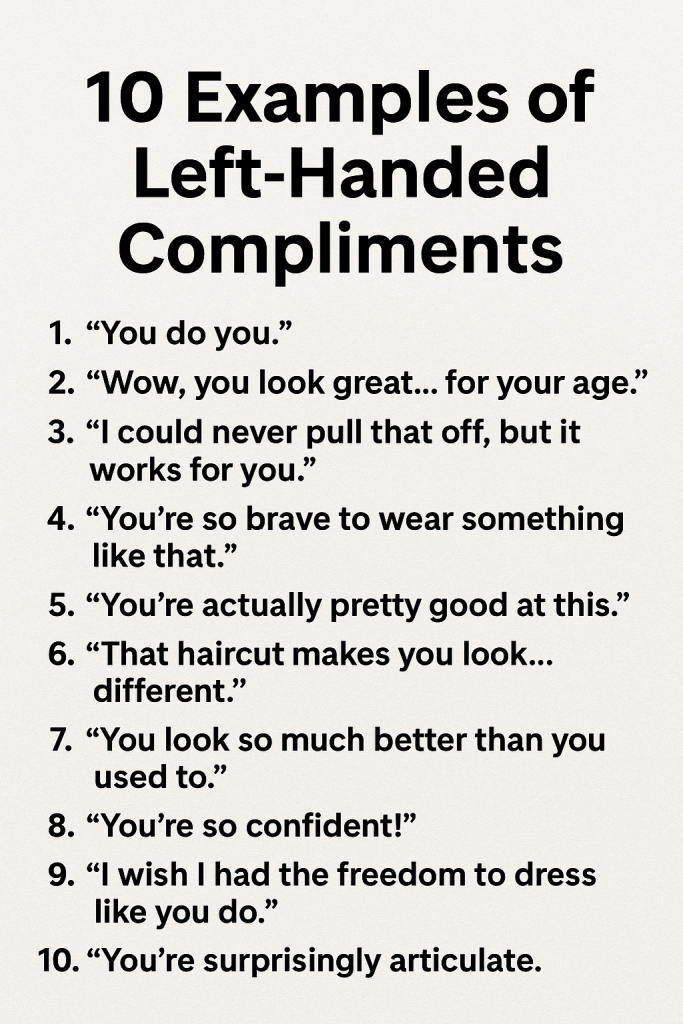
“You Do You” and Other Left-Handed Compliments

Left-handed compliments are passive-aggressive. They’re sly. And they often leave you wondering, was that supposed to be nice?

Since publishing my book Transformation, I’ve been on a personal mission, one that’s both exciting and a little terrifying, to become the most authentic version of myself. I’ve been journaling the journey, collecting the lessons, and slowly shaping them into my next book, Nurturing the Soul. My hope is that it will one day serve as a gentle light for others walking their own path toward self-acceptance.

The very first step? Deciding I was done pretending.

For years, I wore a mask so seamlessly that even I forgot it was there. I smiled, I served, I poured myself out for others, so much so that I started losing sight of the person underneath the performance. Don’t get me wrong, I value kindness and service deeply. But somewhere along the way, “serving” others became a cover for something else: a fear of letting people down. And when you fear disappointing others, you learn to swallow your own needs… and sometimes even swallow insults.

One type of insult I’ve swallowed more times than I can count is what’s known as the left-handed compliment.

What’s a Left-handed Compliment?

Also called a “backhanded compliment,” it’s a remark that sounds like praise on the surface but is wrapped around a little barb of criticism. It’s a way of smiling at you while simultaneously poking you in the ribs.

It’s passive-aggressive. It’s sly. And it often leaves you wondering, was that supposed to be nice?

The truth is, these kinds of comments are less about lifting you up and more about putting you in your place. And while they might seem harmless to the speaker, they can sting, especially if you’re used to brushing things off in the name of keeping the peace.

So, let’s talk examples.

10 Examples of Left-handed Compliments

  1. “You do you.”
    Translation: I think your choice is weird, but hey, if you want to be wrong, that’s on you.
  2. “Wow, you look great… for your age.”
    Translation: You look good, but let’s not forget you’re no spring chicken.
  3. “I could never pull that off, but it works for you.”
    Translation: That outfit is questionable, but somehow you manage to survive it.
  4. “You’re so brave to wear something like that.”
    Translation: I would never wear that because I think it’s awful.
  5. “You’re actually pretty good at this.”
    Translation: I assumed you’d be terrible, but you’ve exceeded my low expectations.
  6. “That haircut makes you look… different.”
    Translation: I don’t like it, but I’ll pretend I’m neutral.
  7. “You look so much better than you used to.”
    Translation: You were a mess before.
  8. “You’re so confident!”
    Translation: I wouldn’t have the nerve to do what you’re doing, because it’s risky (or silly).
  9. “I wish I had the freedom to dress like you do.”
    Translation: You clearly don’t care what people think, and maybe you should.
  10. “You’re surprisingly articulate.”
    Translation: I didn’t expect you to sound intelligent.

Nurture Your Soul

Learning to spot these backhanded compliments has been one of the most freeing parts of my journey. They no longer slip by unnoticed. And more importantly, I no longer feel the need to laugh them off to avoid making things awkward.

Peeling off the mask isn’t just about being honest with others; it’s about being honest with yourself when something doesn’t feel right.

The more I practice this, the more I realize that nurturing the soul sometimes means pruning away the voices that don’t feed it. And I think that’s a compliment worth giving… and receiving.